
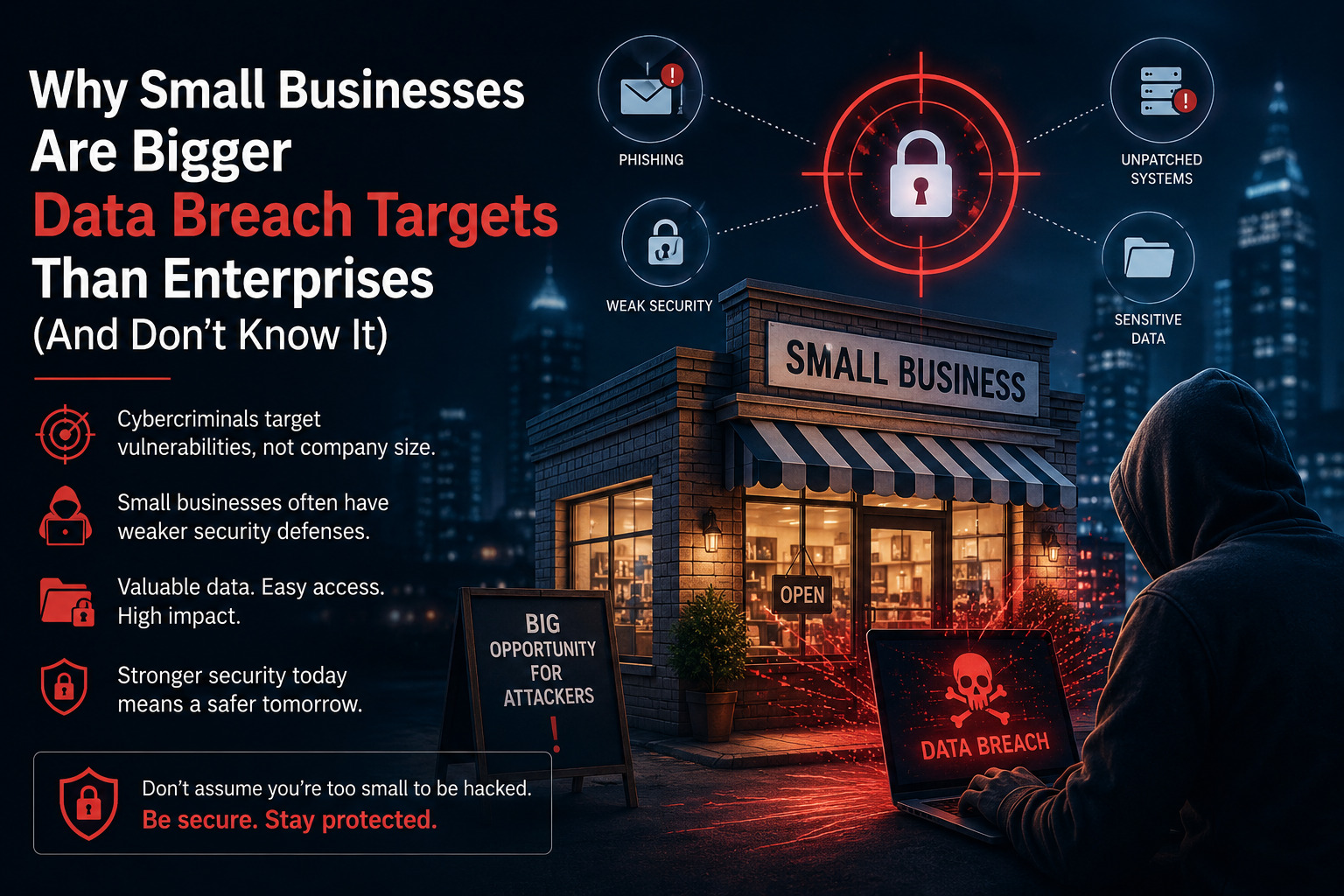
Why Small Businesses Are Bigger Data Breach Targets Than Enterprises (And Don't Know It)
Introduction
When people hear about cyberattacks, they usually think of multinational corporations, global banks, or social media giants. However, cybercriminals increasingly target small and medium-sized businesses because they often have weaker security controls, limited IT resources, and valuable customer data. Many small businesses wrongly believe they are 'too small to be hacked,' making them attractive targets for attackers. Organizations investing in digital transformation must recognize that cybersecurity is no longer optional—it's a business necessity.
Why Are Small Businesses Becoming Prime Targets?
Cybercriminals often view small businesses as easier targets because they typically lack dedicated security teams, advanced monitoring tools, and mature cybersecurity policies. Attackers know that compromising a smaller organization often requires less effort while still providing access to valuable financial records, customer information, and intellectual property.
The Biggest Myth: 'We're Too Small to Be Hacked'
One of the most dangerous misconceptions is believing that hackers only attack large enterprises. Automated attacks scan the internet continuously, looking for vulnerable websites, exposed servers, outdated software, and weak passwords—regardless of company size.
Most Common Data Breach Methods
Small businesses are frequently compromised through phishing emails, weak passwords, ransomware, unsecured cloud storage, outdated software, vulnerable web applications, third-party integrations, and poor access management. Organizations developing secure Web Development Services should prioritize secure coding practices and regular security testing.
The Financial Impact of a Data Breach
A successful cyberattack can result in regulatory fines, operational downtime, customer compensation, legal expenses, ransomware payments, reputational damage, and lost business opportunities. For many small businesses, recovering from a major breach can take months and significantly impact long-term growth.
Cloud Security Isn't Automatic
Migrating to the cloud improves scalability and reliability, but cloud providers operate under a shared responsibility model. Businesses remain responsible for securing identities, applications, access controls, and sensitive data. Companies should implement strong identity management, encryption, backup strategies, and continuous monitoring.
Employees Are the First Line of Defense
Human error remains one of the leading causes of cybersecurity incidents. Regular security awareness training, phishing simulations, multi-factor authentication, and strong password policies significantly reduce the risk of successful attacks.
How AI Is Strengthening Cybersecurity
Modern security platforms use artificial intelligence to detect unusual behavior, identify threats in real time, automate incident response, and reduce false positives. Businesses can leverage intelligent security solutions to strengthen cyber resilience.
10 Cybersecurity Best Practices for Small Businesses
1. Enable Multi-Factor Authentication (MFA).
2. Keep software updated.
3. Use strong password policies.
4. Regularly back up critical data.
5. Encrypt sensitive information.
6. Train employees on cybersecurity awareness.
7. Perform regular vulnerability assessments.
8. Monitor cloud infrastructure continuously.
9. Limit user permissions using the principle of least privilege.
10. Develop and test an incident response plan.
Secure Digital Transformation Starts with Security by Design
As businesses modernize applications and adopt cloud technologies, cybersecurity should be integrated from the beginning rather than treated as an afterthought. Organizations embracing Digital Transformation Services should implement secure architectures, continuous monitoring, and proactive risk management.
The Future of Cybersecurity for Small Businesses
Cyber threats continue to evolve rapidly, making proactive security investments more important than ever. Businesses that adopt modern security frameworks, cloud best practices, AI-assisted threat detection, and continuous monitoring will be better prepared to protect their operations and customer trust.
Conclusion
Small businesses are no longer overlooked by cybercriminals—they are increasingly becoming preferred targets because of limited security resources and common misconceptions about risk. Investing in proactive cybersecurity, secure cloud infrastructure, employee awareness, and modern application security helps organizations reduce risk, protect customer data, and build long-term business resilience.